Spring Excitement
Transplant Techniques and Webinar

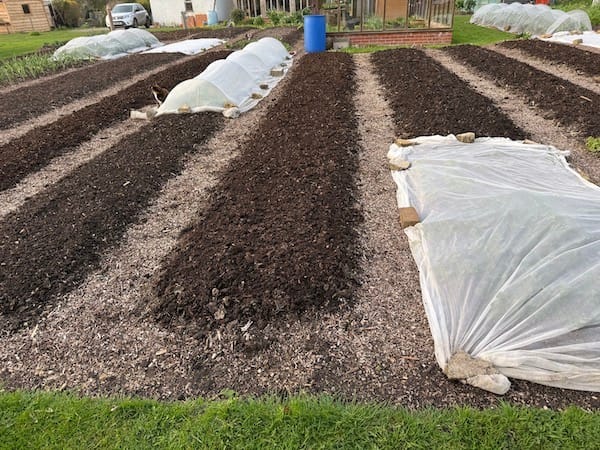
Beds raked lightly to disturb weed seedlings and knock out compost-lumps
I love the spring equinox! And I wish you the best for this exciting time of year, when suddenly we can do so much. Even for those of you whose climate is still very cold, it won’t be long.
Whatever the weather outside, it’s a great time for propagation. Leaves are noticeably stronger thanks to the extra light, plus all of the seedlings below tolerate cold after we plant them outside.
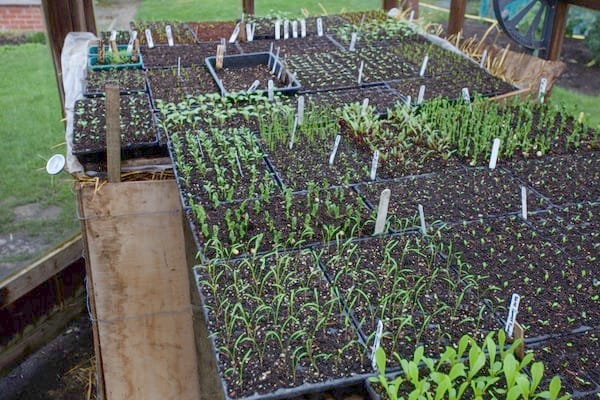
Lettuce, fennel, peas, herbs, beetroot, kohlrabi, onions and more. At the back is my hotbed of fresh horse manure, running at 50°C after a top up with fresh manure
There are many sowings you can make now. Like, any of the ones you’re seeing here, it’s not too late. And it’s peak time for sowing celery and celeriac.
If not already sown, in a polytunnel or greenhouse, I would sow lettuce, beetroot, onions, salad onions, peas, broad beans, bulb fennel, kohlrabi, cabbage, calabrese/broccoli, cauliflower, coriander + dill, parsley. And tomatoes, aubergines, peppers and chillies - my aubergine seedlings are only just emerging, sown two weeks ago.
Also soon, melons in big warmth.
It’s still too early for cucurbits, sweetcorn and runner beans, see this short video.
Outside you can sow carrots as well as the lettuce, beetroot, onions, salad onions, peas, broad beans, bulb fennel, coriander, dill and parsley.
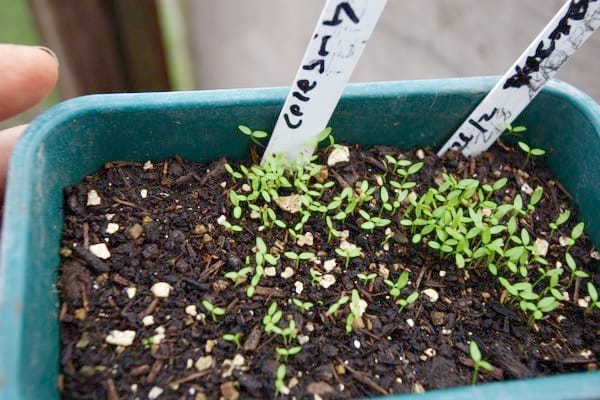
Celery (see How to Grow video) sown three weeks earlier with seeds on the surface, same method as for celeriac. For two whole weeks, nothing was visible and I started to wonder if this one year old seed was still viable, then suddenly I could see seeding leaves, On Monday we shall prick them into module cells.
Many seedlings are in the ground already here. I plant them small, finding they establish better like that. Plus it means I need less propagation space, since plants leave the greenhouse 2-4 weeks after we sow them.
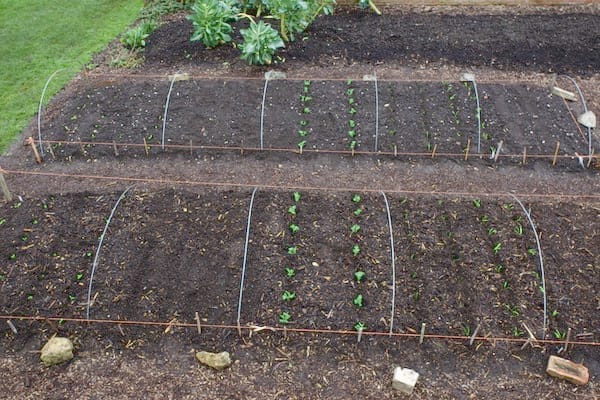
Spacings on the trial beds, dig bed at top and no dig close to camera. From left beets, lettuce x3, radish, potato, radish, potato, peas x2, onion, spinach, and kohlrabi to come
I took the photo above to give you an idea of spacings, between 22 to 30cm depending on the vegetable, see my Essential Knowledge info pack, and this short video.
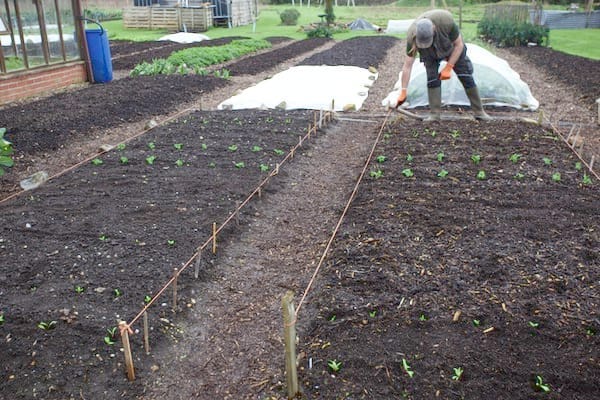
Adam is about to put in the hoops
Through March and April, I use fleece covers a lot, overall new plantings. As well as offering protection against cold wind and any frosts, they offer excellent prevention against pigeons, rabbits and more.
Most are flat on the ground, because when suspended on hoops, the wind can’t get underneath and this week we had to put some extra stones in to keep the fleece in place.
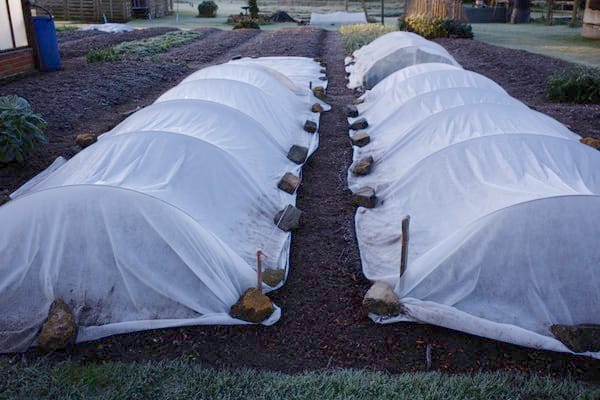
This morning was a -2°C frost, and when the cover is on hoops, seedlings are frost free at this temperature but would freeze if it was colder. I wanted to lift the fleece to show this with a photo but the stones were all stuck to the cover with ice.
The fleece I use filters about 30% of the sunlight, but the 70% passing through has double value because fleece holds the infrared warmth it creates. Without the cover, that warmth would just blow away, so it’s a net gain at a time of year when we need all possible warmth, while often there is more light than plants can use when temperature stay low.
The environment under fleece can be too hot by May, so that’s the main reason at that time for switching to mesh, which does holds less warmth and allows a little more light through.
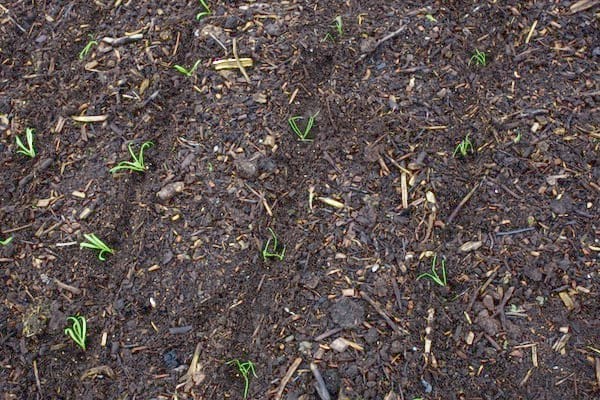
Seedling size, spinach left and multisown onions right, now under the cover
If seedlings have long stems, I make a deeper hole for them with my long dibber. Their long and weak stems are now protected by surrounding soil and compost, a leggy seedling has become a sturdy one. You can do this with all plants and see the process more in this short video.
Module trays that I designed and use are available in many countries: in the UK from Containerwise, in N America from All About the Garden and see my site for more stockists.
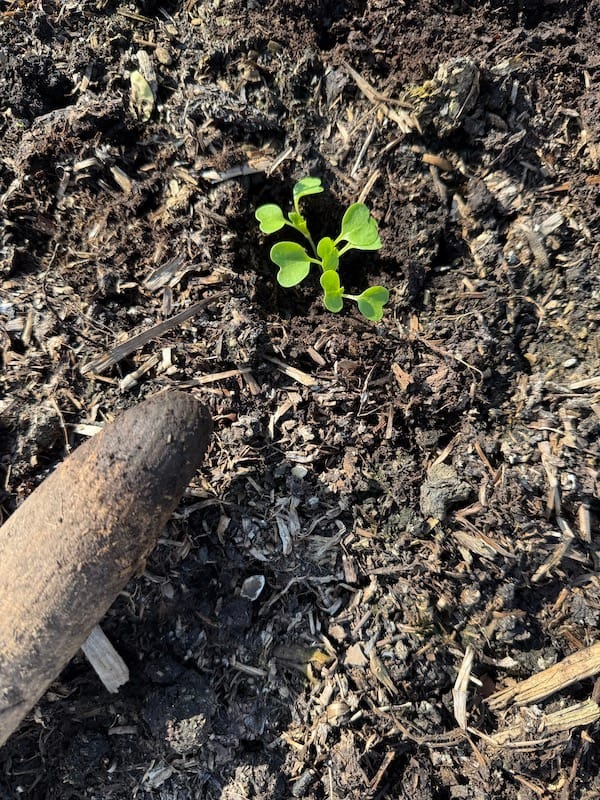
Turnips’ long stems now nestling in the hole, which I don’t fill in, it stays exactly like that. If it’s dry weather, some gentle watering helps, but so far, we have not watered any new plantings.
At the same time as the garden is filling, one end of my house is disappearing. Builders arrived this week and have knocked down the concrete garage, together with the kitchen and bathroom. A new build will happen on that same footprint, in red brick to match the existing.
Building should be finished by September, and because of the upheaval we are running fewer courses, plus starting in May rather than March. They have been filling fast and are almost sold out until mid-summer, so we shall add a new date.
I am teaching elsewhere, including Sweden 9th-14th May, Hampton Manor near Birmingham 26th July, the Black Forest in early August, and Switzerland in late August. Plus there is an open afternoon here on 17th May.
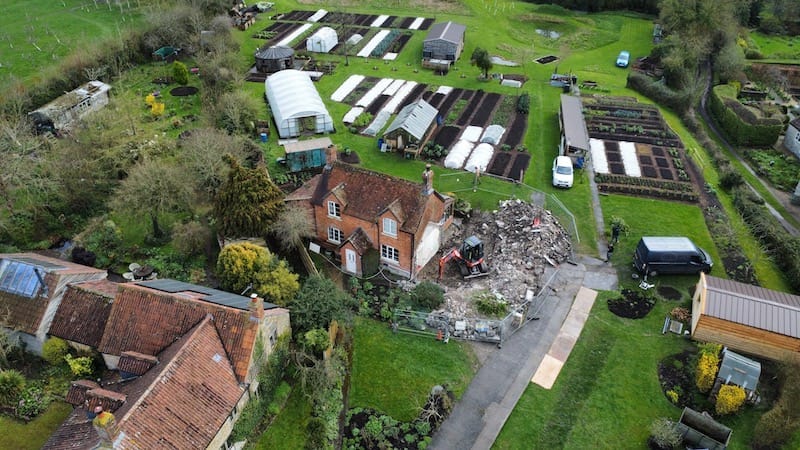
Behind the building work, you can see a fair amount has already happened in the garden. The new shed bottom right is full of house contents, photo by Rob Baxter, builder.
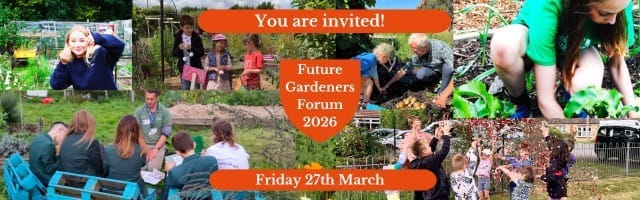
I’m delighted to invite you to our free webinar ‘GET ON MY LAND’, on Friday 27th May at 10am. It will be our third Future Gardeners Forum and we have excellent panel guests to discuss how we gardeners can help access land for young people to grow. You can sign up any time before 27th, and afterwards we shall post the webinar on my YouTube channel.
In April, I am speaking about no dig at Caryford Hall just up the road. And on 14th April, I launch my new Grow Together book, at Toppings in Bath.
Information in the book is relevant for late spring and through summer into autumn. Someone asked on Instagram if the release date of 9th April makes it too late for using this year! And I’m delighted to say that the opposite is true.
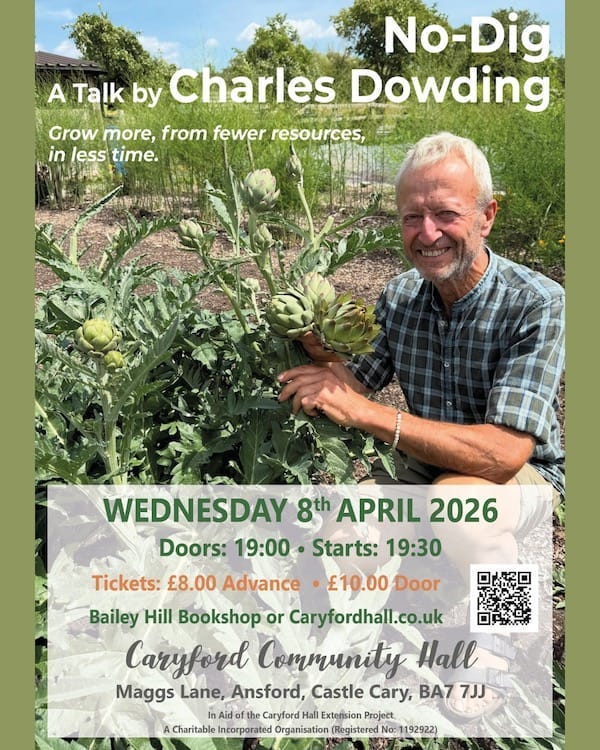
First talk of the year
The weather has been mild enough for significant growth on broad beans. I can’t quantify it, but I’m sure that my energy devices are contributing also to this warmth, as I explain in my Energy book.
I don’t have the means to measure an energy field, but I can see results which are very promising. Many visitors here are amazed at the strength of late winter growth.
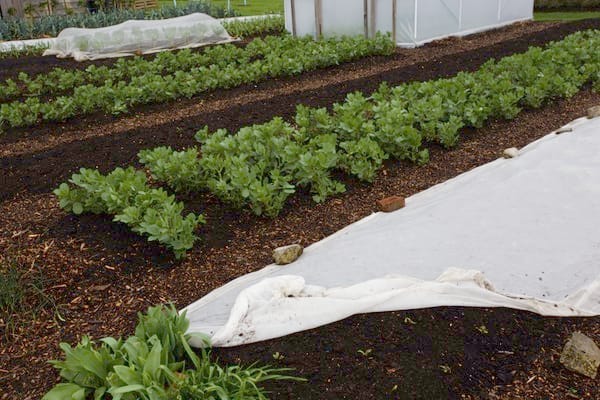
Broad beans sown early November, aoon will need support from a string around the beds. Near to camera are new beetroot seedlings.
Peas are hardy to cold, so pea shoots are a fine possibility for early greens. At this stage the output is special to eat raw, for pea flavour is say mixed salads. Later by May the same plants become very prolific.
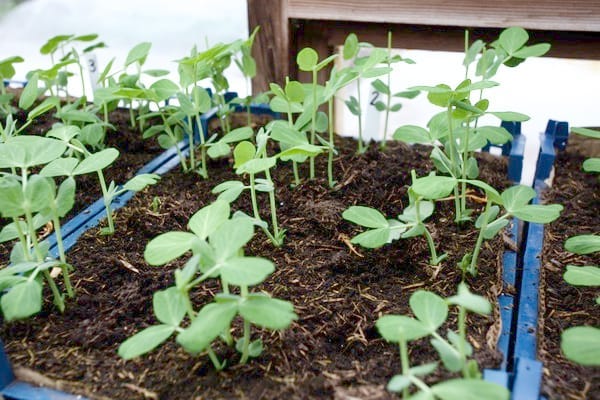
Peas sown six weeks ago in these boxes of compost just gave their first pick of shoots. There can be two months of harvests to follow, with trays soon moved to a sheltered spot outside.
Greens are the main harvest now, together with stored vegetables for another month or so. This was a weekly pick for The Three Horsehoes pub.
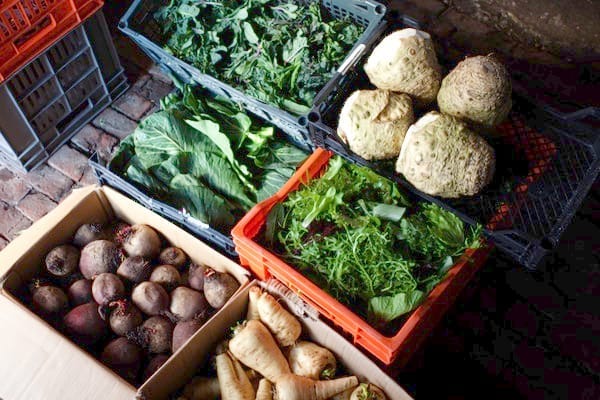
The Newt is two miles up the road from me, and their podcast no.4 features a chat with Arthur Cole as we drove around the estate, starting in the large composting yard, then looking at the market garden and nursery, finishing in the garden cafe. Find it on Apple, Spotify, and the Newt website.
From seeing the market garden, I realise they suffer the same issue as the rest of us - how to make it pay to grow vegetables. At least they have a ready market in the shop, restaurants and website, and they can subsidise the garden.
Even so, how to balance the cost of staff against the value of produce grown? My take is that vegetables need to be sold for a higher price, which reflects growing by hand, the use of no chemical supports and their healthy freshness.
Or grow your own.
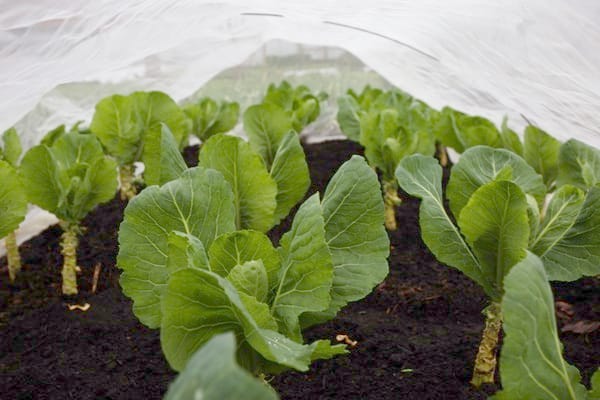
A great crop for beginners, collards sown August and planted mid-September, giving leaves since December. Easy to grow BUT you need fertile bed space ready, and a mesh cover + hoops for plant protection.
The School of Traditional Skills is about learning self-sufficiency, with an online platform and app. Skills taught as well as gardening are food preservation and animal care. The focus is on practical, instructor-led, hands-on skills for adults and children, starting Monday 16th March.
Day 1 focuses on vegetable garden setup and DIY composting for fast wins.
Day 2 moves into long-term investments like fruit trees and food forests.
Day 3 targets natural wellness and medicinal herb gardens.
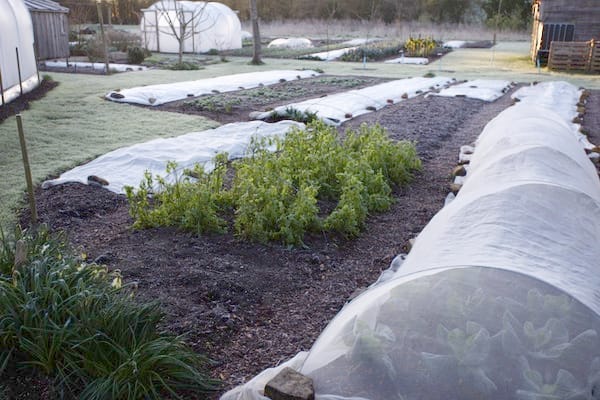
Early morning, 14th March, we do have frost here and growth happens. There’s another batch of collards under the cover front right for example. Several beds are planted but I worry about being ahead of schedule, due to earlier mild weather.
Seed Saving
For all vegetables except lettuce, peas, tomatoes and French beans, you need ten or more plants for genes to be cross pollinated between them. Otherwise the seeds are weak and inbred.
So keeping seed from one flowering cabbage is not worthwhile. But from one lettuce it’s fine, or many lambs lettuce as below. And you could plant at least ten onions, stored from last year, to sprout with a flowering stalk and give seeds by early autumn.
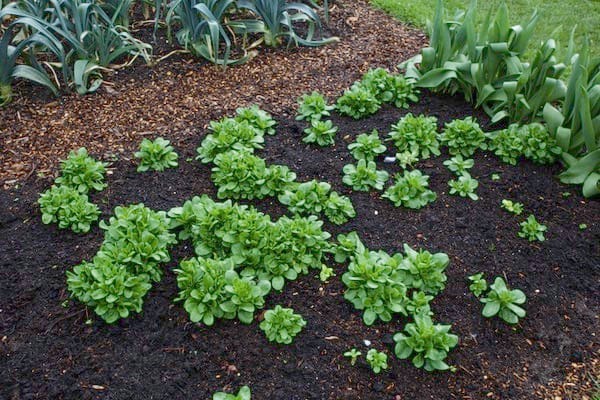
We have enjoyed wonderful harvests of lambs lettuce since November, partly from the increasing quality of homesaved seed. I’m leaving these remaining plants to flower and seed, which happens by late May. They are rapid and you need to watch for when you see the first seeds falling, then harvest them all asap.
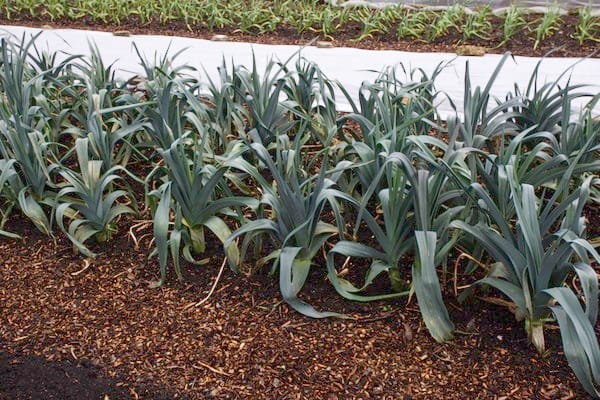
Leeks are from homesaved Bandit seed, multisown 1st May, 10.5 months ago. I expect them to grow more, for harvests in April and early May. They had a mesh over in autumn, to protect against the leaf miner fly.
Very informative as always - thank you :-)