Ready For Winter
29th November 2024

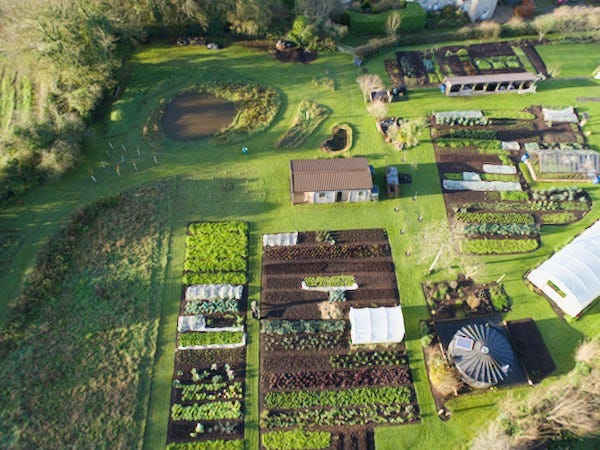
Homeacres 25th November, beds emptying of harvest so we spread compost for 2026, and to feed soil life during winter. See my short video.
It's much better for soil organisms to have compost on it through winter. Then in spring you have a lovely soft surface to sow and plant into. I've been doing this for 40 years and I see every year how the nutrients are retained, from being not soluble in winter rains, so you have excellent growth for the year to come.
And unlike mulches of undecomposed materials, compost gives little habitat to slugs.
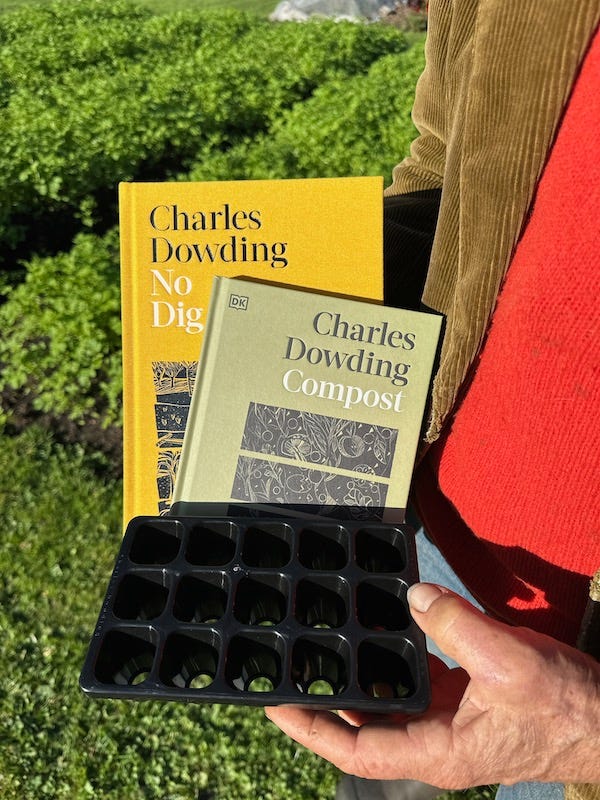
One special offer from now until 24th December, is this selection of three items for £40. A free CD15 module tray with the two books.
In addition, for the four days now from Green Friday to Magic Monday, we offer 25% off everything in the shop!! The discount happens at checkout in the shop, for the books you see below, and digital courses, Calendar 2025 and Diary.
Homeacres courses are not in this offer, please find dates for those here.
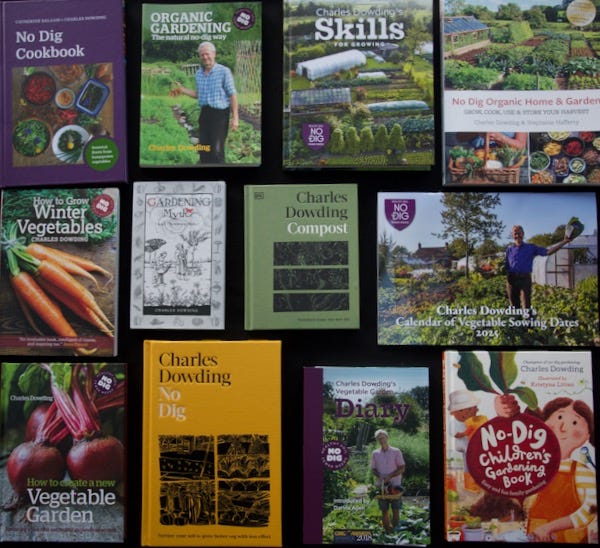
Books by me, signed by me and you can request dedications at checkout.
Sowing, planting in December
Only garlic outside, and only broad / fava beans for transplanting outside. I shall be doing that Monday 2nd December, after digging one bed of my two bed trial, with compost in its trenches.The other bed has the same amount of compost on top.
Look out for a YouTube video about this, that Nicola is going to film.
One interesting difference I've noticed is moss growing all around the dig bed, but there's almost none on the no dig. Moss likes damp soil, not surface compost.
After the dig and composting, we shall plant both beds ahead of winter with the plants you see below, which have been in the greenhouse for a month. They are Aquadulce Claudia broad beans, my own seed.
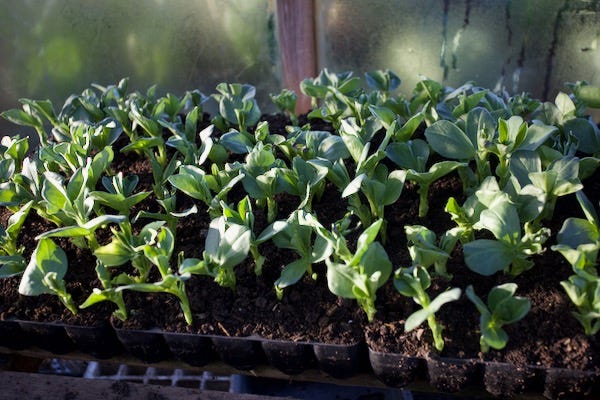
I sow one broad bean seed per cell of Containerwise 40L trays which I use also for runner / pole beans. The 40L cells need three times more compost than those of my design of propagation trays, which nonetheless are good for every other vegetable, including multisown radish, beetroot and onions, peas and corn. There are resellers of these trays worldwide.
The compost is half my own worm compost sieved to 4mm, and half Urban Wyrm peat free which includes 30% worm casts.
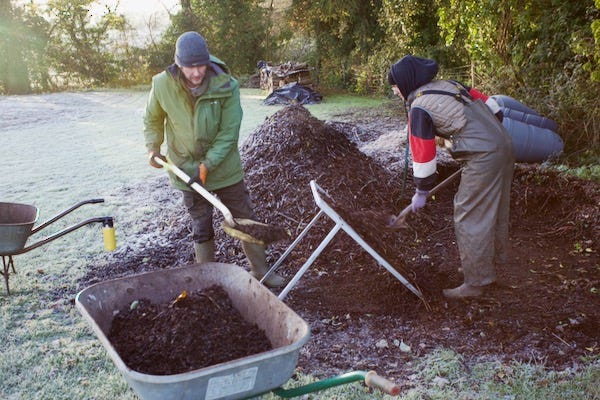
Thursday 28th November was a picking morning here for salad, but the leaves were frozen. So Adam and Taryn got stuck into the woodchip pile of one year old ash from Woodland Horticulture in Somerset. It's in large pieces, so we put it through a standalone 12 mm sieve. Taryn is doing that and Adam is scooping up the smaller wood that fell through, using a plastic shovel which is beautifully light and does not dig into the ground below.
The large pile behind the sieve is large pieces already sieved out. I don't want them in my pathways because they take years to decompose and make it quite uncomfortable to walk on the paths, especially in dry weather. In a year, we shall re-sieve them.
By 10 am it was warming up and they were able to pick salad from the polytunnel. When added to radicchios, small Chinese cabbage and a few outdoor leaves, we had 20 kg for selling. But the cold weather of last week which included a frost of -4°C, 25°F, has damaged many outdoor salad plants.
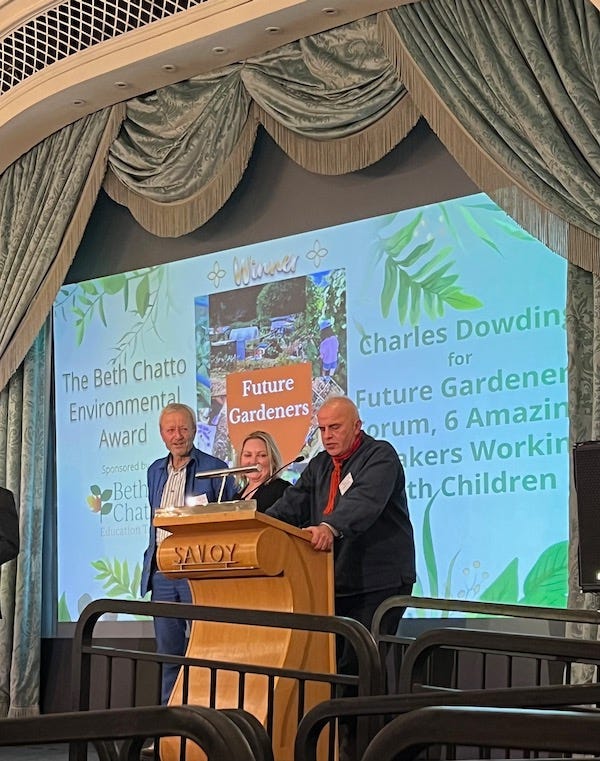
GMG Awards in the ballroom of the Savoy Hotel, London, presented by Fergus Garrett
NEWS
The Garden Media Guild run annual awards for journalists, authors, creators and photographers who cover gardening topics. I entered our Future Gardeners Forum (see below) and newsletter for the Beth Chatto Environmental award, and won!
The judges said:
There was an outstandingly high standard of entries this year, with every entry offering a different and inspiring perspective to a horticultural or gardening issue related to the environment. We wish everyone could read them all, but we agreed that this year’s winner was the entry that has the potential to reach, inspire and influence a wide range of people, from teachers, parents and community workers, to amateur and professional gardeners and more, across different countries and cultures. It was inspiring, and inclusive, and made us want to get involved.
The grand ceremony was in London last Friday and many of the team and friends attended.
Below I'm with Lizzie Schofield of BBC Beechgrove who won New Talent Award, Jamie Walton of @nettlesandpetals who son social media influencer, Sheila Das who is moving to be Head of Parks and Gardens at The National Trust, and Anya Lautenbach whose second book is another bestseller.
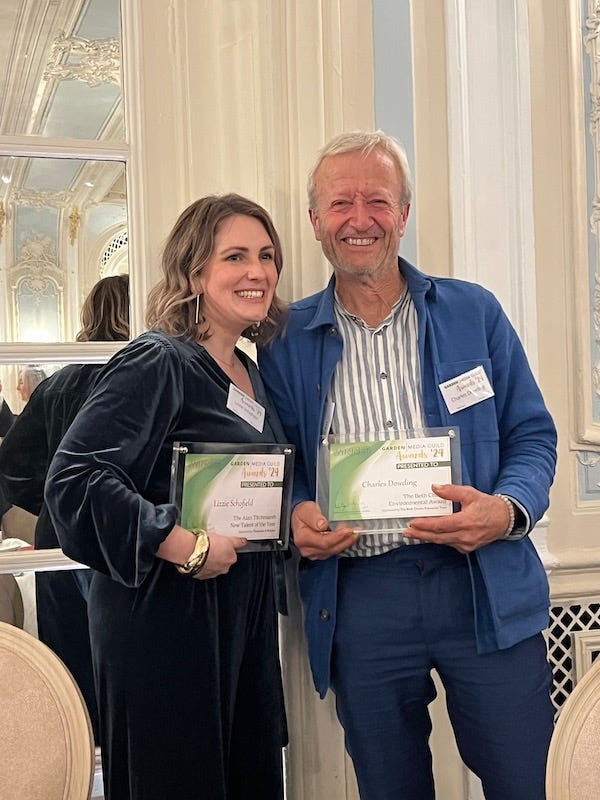

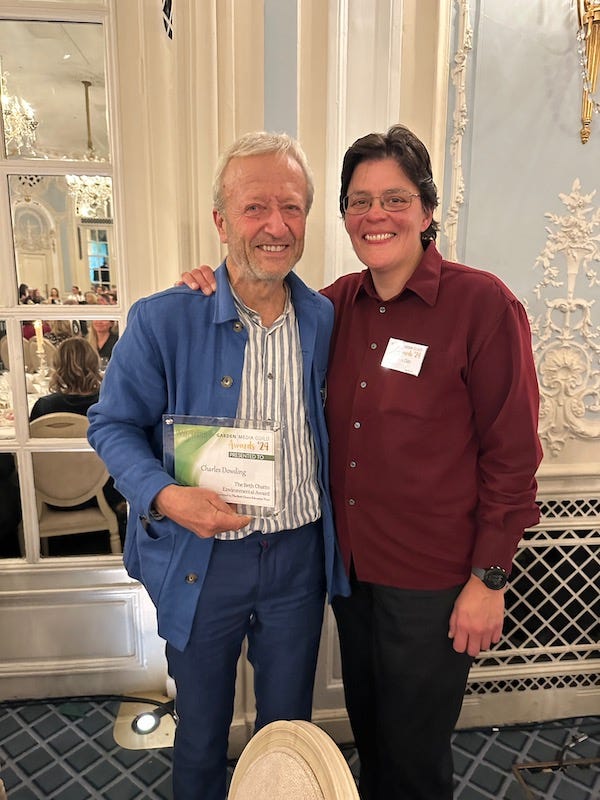

This award has given us encouragement to run a second forum, in February. We’ll invite new speakers and hear about their projects. If you would like to be involved please email Nicola.
A huge thank you to the speakers who contributed to our first forum. The award is shared with them, as well as everyone who gardens with children.
FACEBOOK
I am back with a new page. There are many fake Facebook pages with my name or similar, and they look convincing because it's possible to lift all of my content from Instagram onto Facebook. Please don't be fooled by that, because the only page that is me is the one with this link.
The old page has been binned by Meta because of all the confusion around it. I had no say in that decision, but it has gone forever, with its 188,000 followers. I'm starting again and currently have 188 followers! Please join, we have made it fully secure.
UPCOMING EVENTS
All my Homeacres Course dates are available to book on the website here. There are also vouchers available.
I am teaching Day Courses, Weekend Intensive Courses and short Afternoon Courses with the addition of some Energy Gardening Day Courses. There is a special two day Energy Course with Alanna Moore who has written 13 books on nature energies, understanding them and dowsing to measure them.
I'm looking forward to my talk at Leigh-on-Sea next Tuesday. This sold out weeks ago and we find we are fielding many other requests for me to speak. Time needed for travel is a difficulty, unless we can organise several events over two or three days in, for example, the north of England. Please contact Nicola if you're interested, for February especially.
I shall be at West Dean College, Sussex on 18th January giving a workshop on no dig and understanding new approaches, from 10am to 3pm. You can book in here.
There are many travel and teaching plans for 2025. I'll be in The British Virgin Islands in early February, giving talks and going into schools too. In March I'm visiting Tipperary and Derry. nothing confirmed yet.
12th-13th April I teach two day courses in Denmark, and in May I have trips to the Netherlands and Alaska. In Alaska I am giving the keynote speech at the Master Gardeners Conference in Juneau, as well as teaching in Anchorage.
An American travel group are visiting here on Monday 16th of June as part of a week looking at sights and homesteads in the south of England. It's a tour that's open to anyone worldwide.
2025 will be an exciting year. I shall post more details about these trips soon.
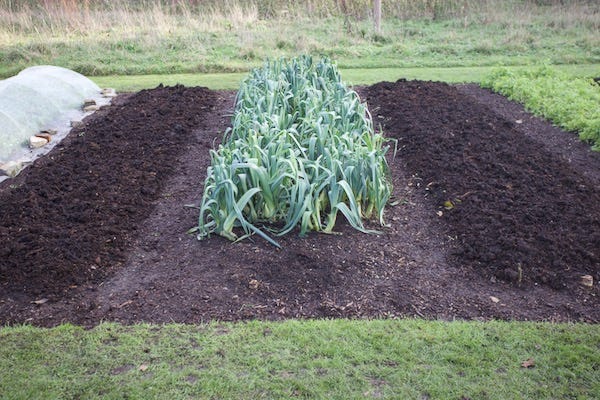
Beds either side of the leeks have just given wonderful late autumn harvests of Tokyo turnips. This year I kept a mesh over them the whole time, as well as multisowing them two weeks later, on 27th August, to transplant 8th September after potatoes.
Later sowing and the mesh cover helped to have a harvest of sweet, small turnips with very little damage from cabbage root fly.
The new compost is around 3 cm/1" or so, see the depth in my video. On these beds it's half mushroom compost and half home-made.
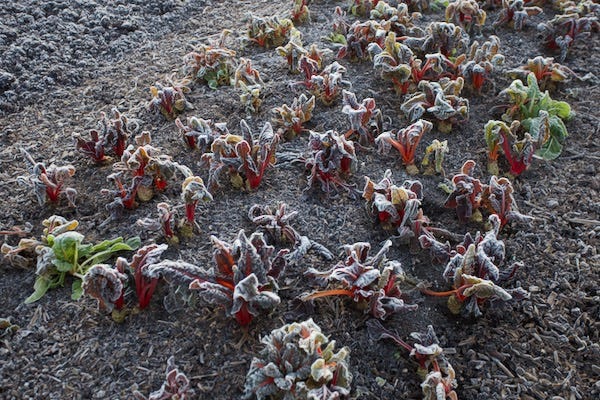
Chard plants survive frost, but the leaf stalks go soft after a night of about -3°C, 27°F.
From now until March, assuming they survive winter, the quality of chard harvests will be low and the quantity small. If the temperature drops below -6°C, the plants will not survive, in my experience here. A cover of fleece could help, but the high humidity levels in winter can cause damage from rotting underneath fleece. I've noticed that problem on broad bean plants which often survive better without a cover.
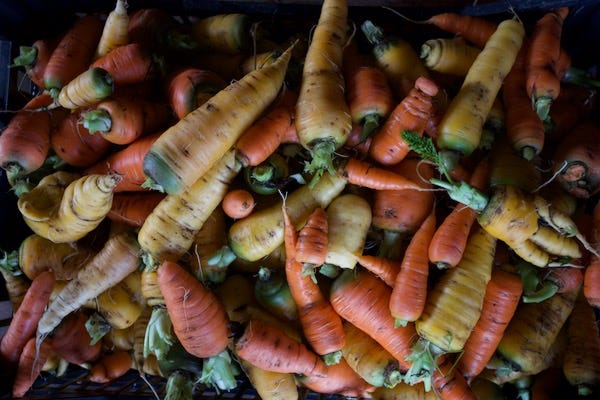
See my harvests to store video. These carrots would survive in the soil, but they have so much root fly that I decided to have them all out. The maggots continue eating all winter here.
We washed them and shall eat and sell them within six weeks or so. The yellow ones are Jaune du Doubs and they are a little tough.
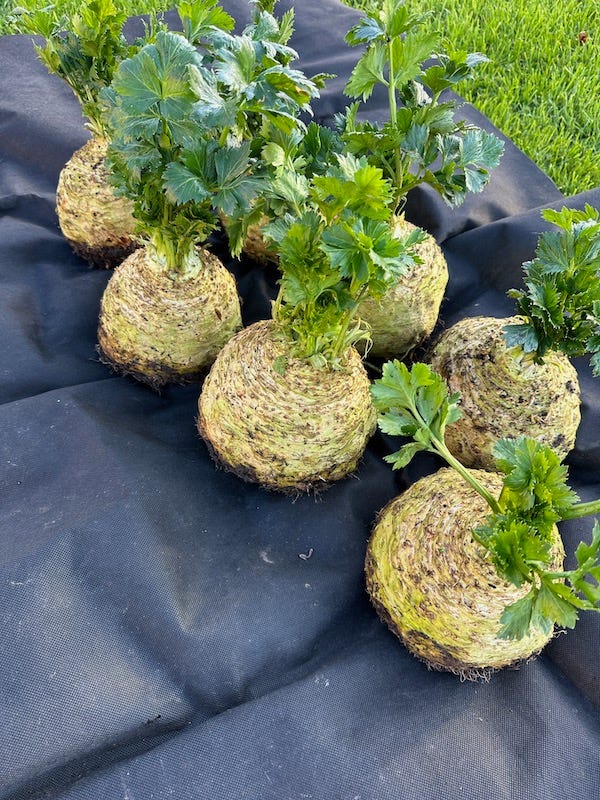
Grow celeriac
I'm fascinated by how these continued to swell in November. They are Prinz, sown 22nd March in a small tray, pricked into CD modules and transplanted from them 10th May between garlic.
A month ago I removed diseased leaves, and the plants have stayed healthy enough to swell more. In late October we sowed broad beans between the celeriac.
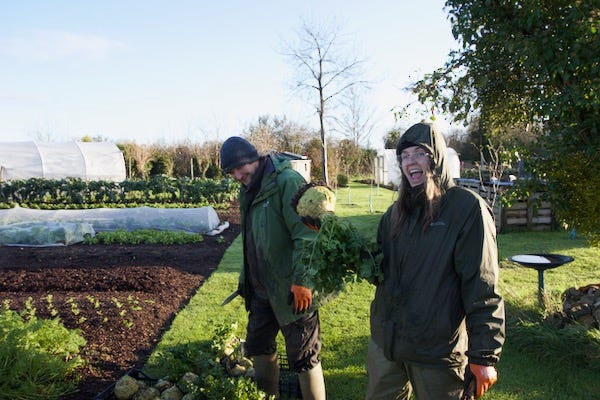
Taryn loves a laugh and thought this celeriac is the same size as Adam's head!!
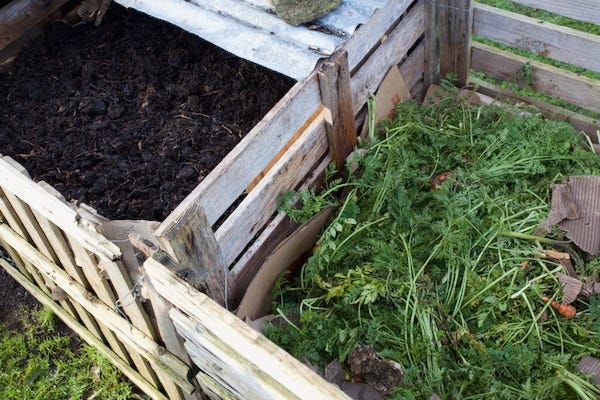
Compost 3 pallet see book
In the three pallet system, we are always filling either of the corner bays, in 10 weeks. Six weeks later that's turned into the middle bay and what you see on the left is four month old compost.
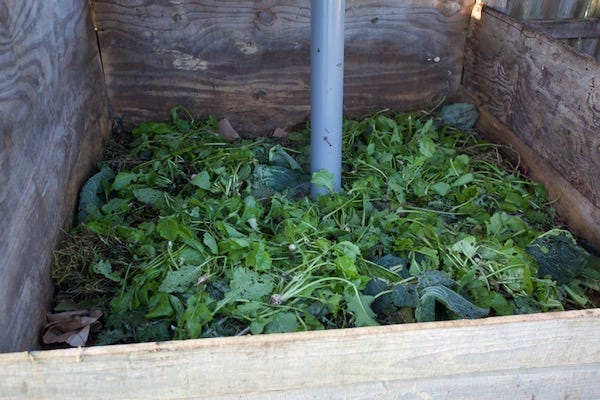
In my larger bays of 1.5 x 1.8 m, I keep a pipe in the middle while the heap is filling, then remove it after the heap has received final additions, leaving an air-hole down the centre. I don't do this for the pallet heaps because they are smaller, just 1.1 m each side, with less opportunity for anaerobic conditions in the middle.
Opportunities to grow
Here are a couple of job opportunities for 2025, working in market Gardens, earning minimum wage, one in S Oxon, and one in S Glos includes accommodation.
Roots allotments are running an amazing £1 deal this weekend, for a plot on any of their sites nationwide any of their sites.
There is a petition in the UK for increasing rural education.

My vegetable garden is a square of 55' each side. I last used a rototiller in 2000 (because it broke right after a costly service, and I was disheartened by the idea of spending more $$); last turned soil with grapehoe in 2018, because I looked at myself and asked, "Why are you going to all this trouble? Why not just hoe off the surface weeds?" I didn't discover re-gen and no-till (and you) until late '21. I've been observing how each year the effort decreases, and many times this year I have found myself going out actually hunting for weeds to pull. Didn't put two and two together until listening to Farmer Jesse Frost (No-Till Growers) this week. That the no-till I've been practicing is responsible.
Just in case they get lost amongst the latest books, I'd like to recommend garden myths and winter vegetables. They are an excellent adjunct to the what -when-where-how books. It may be a little impertinent to suggest, but I would read the books, go and look at your plot, then read the books again